
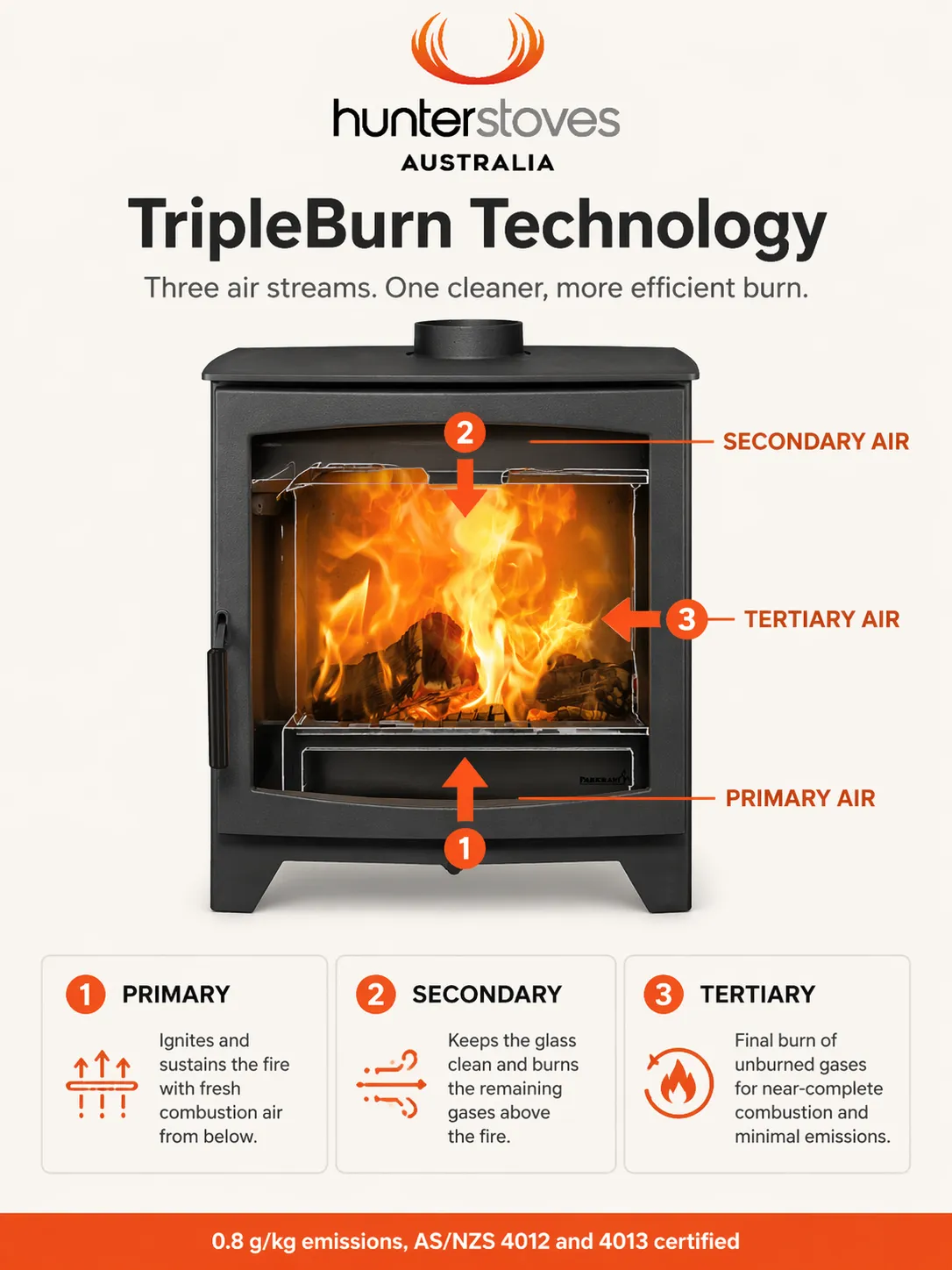
How TripleBurn Technology Delivers Cleaner, More Efficient Heat
Every wood stove burns wood. What separates a high-performance stove from an average one is what it does with the energy released in that process, and what it allows to escape.
TripleBurn Technology is Parkray’s answer to this challenge. It is the combustion system built into every Parkray Aspect stove, and it is the primary reason the Aspect range performs at the efficiency and emissions levels it does.
The Problem with Conventional Combustion
When wood burns, it does not release all of its energy in a single step. The initial combustion of the solid wood produces heat, but it also produces gases (volatile organic compounds, carbon monoxide, and unburned hydrocarbons) that carry significant energy with them up the flue if left unburned.
In a conventional wood stove, much of this secondary energy escapes as smoke. You see it as the dark plume from the chimney. It represents heat that was in the wood but never made it into the room.
It also represents particulate matter: the fine particles that contribute to air quality concerns and that Australian emissions standards are designed to limit.
How TripleBurn Works
TripleBurn addresses this by introducing three separate, precisely engineered air streams into the combustion process.
Primary air enters at the base of the firebox and feeds the initial combustion of the wood, producing the visible flame you see burning through the glass.
Secondary air is preheated before entering the firebox above the primary combustion zone. This hot, oxygen-rich air meets the unburned gases rising from the primary fire and ignites them. This secondary combustion extracts energy that would otherwise be lost, and visibly reduces smoke output.
Tertiary air enters at the top of the firebox to complete the combustion cycle, burning off any remaining gases before they reach the flue. This third stage is what takes TripleBurn beyond the secondary burn systems found in most modern stoves.
The result of all three stages working together is near-complete combustion: more energy extracted from each piece of wood, less particulate matter leaving through the flue, and a cleaner, hotter, more efficient fire.
The Numbers
The Parkray Aspect range achieves the following emissions and efficiency figures as a result of TripleBurn Technology:
| Model | Avg Output | Peak Efficiency | Emissions |
|---|---|---|---|
| Aspect 5 Eco | 6.6kW | 72% | 0.7g/kg |
| Aspect 8 Eco | 8.1kW | 77% | 0.8g/kg |
| Aspect 14 Eco | 8.0kW | 68% | 0.9g/kg |
All three models are certified to AS/NZS 4012 and 4013 standards and already exceed Australia’s upcoming 2030 emission requirements, the mandatory standard all wood heaters sold in Australia will need to meet.
What This Means in Practice
For the owner of a Parkray stove, TripleBurn Technology translates to three practical benefits:
More heat per log. Higher combustion efficiency means you burn less wood to produce the same amount of heat. Over a winter, this is a meaningful difference in fuel cost and effort.
Cleaner glass. The pre-heated airwash system, fed by the secondary air stream, keeps a curtain of warm air moving across the inside of the glass, preventing smoke and tar from depositing on the surface. Your view of the flame stays clear for longer.
Lower emissions. Less particulate matter in the flue means less impact on local air quality, and confidence that your stove meets current and future Australian standards.
Find your nearest Hunter Stoves dealer: hunterstoves.com.au
Ready to find your heater?
Browse the full Parkray Aspect Eco range.