
How to season firewood
Dry firewood is the cheapest upgrade you can make to any wood heater. It lights faster, burns hotter, gives off more heat and keeps your glass and flue cleaner. Wet wood does the opposite.
Seasoning is simply letting the wood dry. The method is straightforward. Here is how to do it well.
Why moisture matters
Green wood holds a lot of water. When you burn it, the fire has to boil that water off before it can release heat. That wastes energy, cools the firebox and produces more smoke. The smoke carries unburnt material that coats your flue with creosote and clouds your glass.
The target is firewood below 20% moisture. Below that line, the wood burns cleanly. Above it, you are fighting your own fuel.
Step 1: split it early
Split logs dry far faster than whole rounds. The bark holds moisture in, and the end grain is where most drying happens. Splitting exposes more of the inside to the air.
Split the wood as soon as you can after cutting or delivery. Aim for pieces that fit comfortably in your heater with room around them. Check your heater’s maximum log length when you decide what size to cut. The Parkray Aspect 5 Eco takes up to 400mm, the Aspect 8 Eco up to 500mm and the Aspect 14 Eco up to 540mm. The comparison guide has the full details.
Smaller splits dry quicker. Keep a few thin pieces for kindling too.
Step 2: stack it off the ground
Never stack firewood directly on soil or grass. Ground moisture soaks upward, and the bottom row will stay damp and may rot.
Lift the stack on pallets, timber bearers, bricks or a purpose-built rack. A gap of a few centimetres is enough to let air move underneath. A raised base also keeps insects and damp away from the wood.
Step 3: stack for airflow
Airflow does most of the drying. Stack the wood in rows with the bark side up where you can. Leave small gaps between pieces. Do not pack it tight.
Choose a position that gets sun and wind. An open, breezy spot dries wood much faster than a sheltered, shady corner. Keep the stack clear of walls and fences by a hand’s width or more so air can pass behind it.
Keep the stack a safe distance from your house. Wood stacked against a building invites termites and adds to fire risk.
Step 4: cover the top, leave the sides open
This is the step people get wrong most often.
Cover the top of the stack with a sheet of tin, a tarp or a roofed woodshed. This keeps rain off the wood. Leave the sides open. Wrapping the whole stack in plastic traps moisture inside and slows drying. You want rain kept out and air let in.
If you use a tarp, weigh it down and let it hang only partway down the sides.
Step 5: be patient
Time is the main ingredient. Dense hardwoods take the longest. Our FAQ advises seasoning hardwood for at least 12 months. Softer woods dry sooner, but you should still test them rather than guess.
Stack your next supply while you burn the current one. Always work one lot ahead. That way you never reach for wood that is not ready.
Step 6: check with a moisture meter
Do not judge dryness by looks alone. A moisture meter costs little and removes the guesswork.
- Split a piece of wood fresh from the stack.
- Press the meter’s pins into the freshly split face, along the grain. The outside of a log reads drier than the core.
- Read the number. Below 20% is ready to burn.
- Test several pieces from different parts of the stack.
If readings are still above 20%, give the stack more time.
Signs of seasoned wood
A meter is best, but these signs help.
- Cracks radiating from the centre of the end grain.
- Bark that peels away easily.
- A lighter weight than a freshly cut piece of the same size.
- A hollow, sharp sound when you knock two pieces together. Wet wood sounds dull.
- Greyish, weathered ends.
Storing wood ready to burn
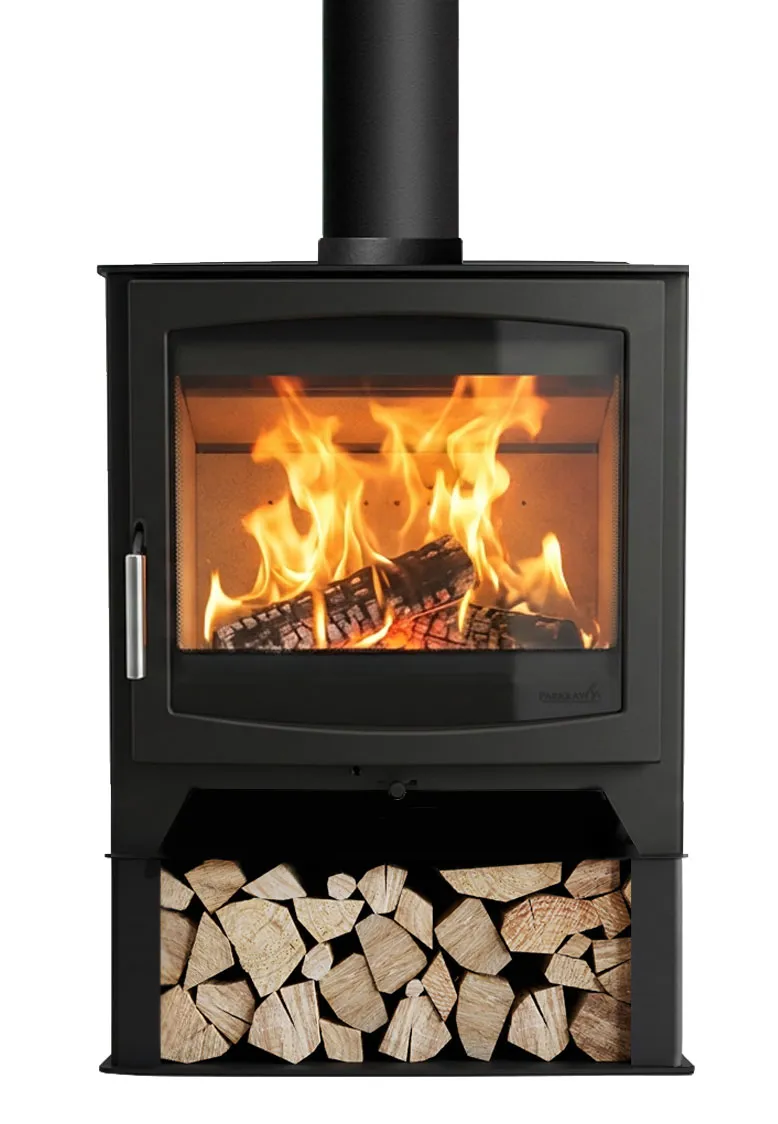
Keep a small amount of seasoned wood near the heater so it can dry out fully in the warmth. Do not stack wood too close to the stove. Follow the clearances in your installation manual. Some bases include a log store, which makes keeping a day’s supply tidy and convenient.
What happens if you burn damp wood
Burning wood above 20% moisture is a common cause of blackened glass, thick smoke and a blocked flue. It also reduces the heat you get from each load. Cleaner burning protects your heater and your neighbours’ air. Our guide to low emission wood heaters and the standards explains why fuel quality matters as much as the appliance.
If you see heavy soot build-up, book a sweep. Our article on the annual service and flue sweep explains what is involved.
Questions
For answers on running your heater, visit the FAQ page. To discuss a heater for your home, use our dealer locator or phone 1800 064 234.
Ready to find your heater?
Browse the full Parkray Aspect Eco range.